Guides · Building
Building a media wall on a chimney breast or old fireplace
How to build a media wall over or around a chimney breast or an old fireplace, covering keeping a disused flue ventilated, airbricks, using the alcoves, depth and when building regulations apply.
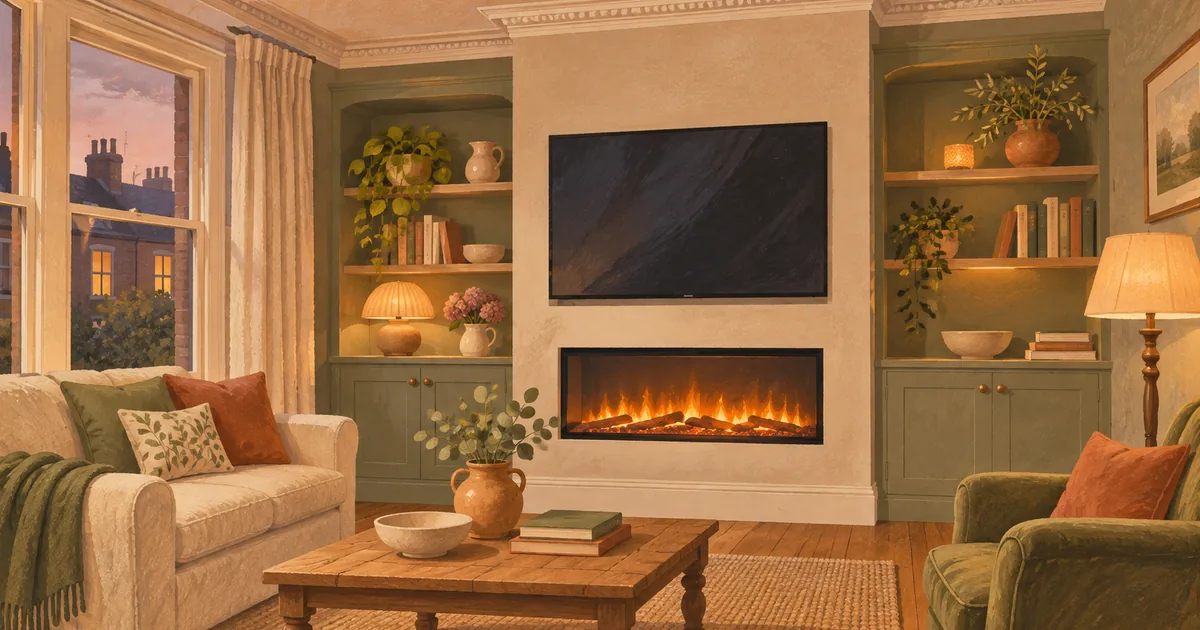
You can build a media wall over or around a chimney breast, but keep the old flue ventilated, leave airbricks clear, and don't cut into the breast itself without building control and a structural engineer. Done well, the breast gives you depth for free and the alcoves become shelving.
Option 1: clad the breast and use the alcoves
The simplest approach treats the chimney breast as the centre of the media wall:
- Frame out the front of the breast to make a flat face for the TV and the fire, or build the fire into a new stud frame in front of it.
- Fill the alcoves with shelving, cupboards or a deeper frame flush with the breast face.
- The breast already projects into the room, so a deep fire may need little or no extra depth beyond what the breast gives you.
If the old fireplace opening is the right size, some people set an electric fire in it. Only do that if the fire's manual allows that kind of installation. Many media wall fires are designed for a purpose-built stud enclosure, and some manuals require non-load-bearing construction: Econovex's manual, for example, says to recess its fires into non-load-bearing walls only. A chimney breast is part of the structure, so check before you rely on it.
Some premium fires are designed for a chimney breast. The DRU Virtuo 150/3 Evolve, for example, has to be built into a (newly built) chimney breast, and its manual says the fire must never act as a load-bearing element.
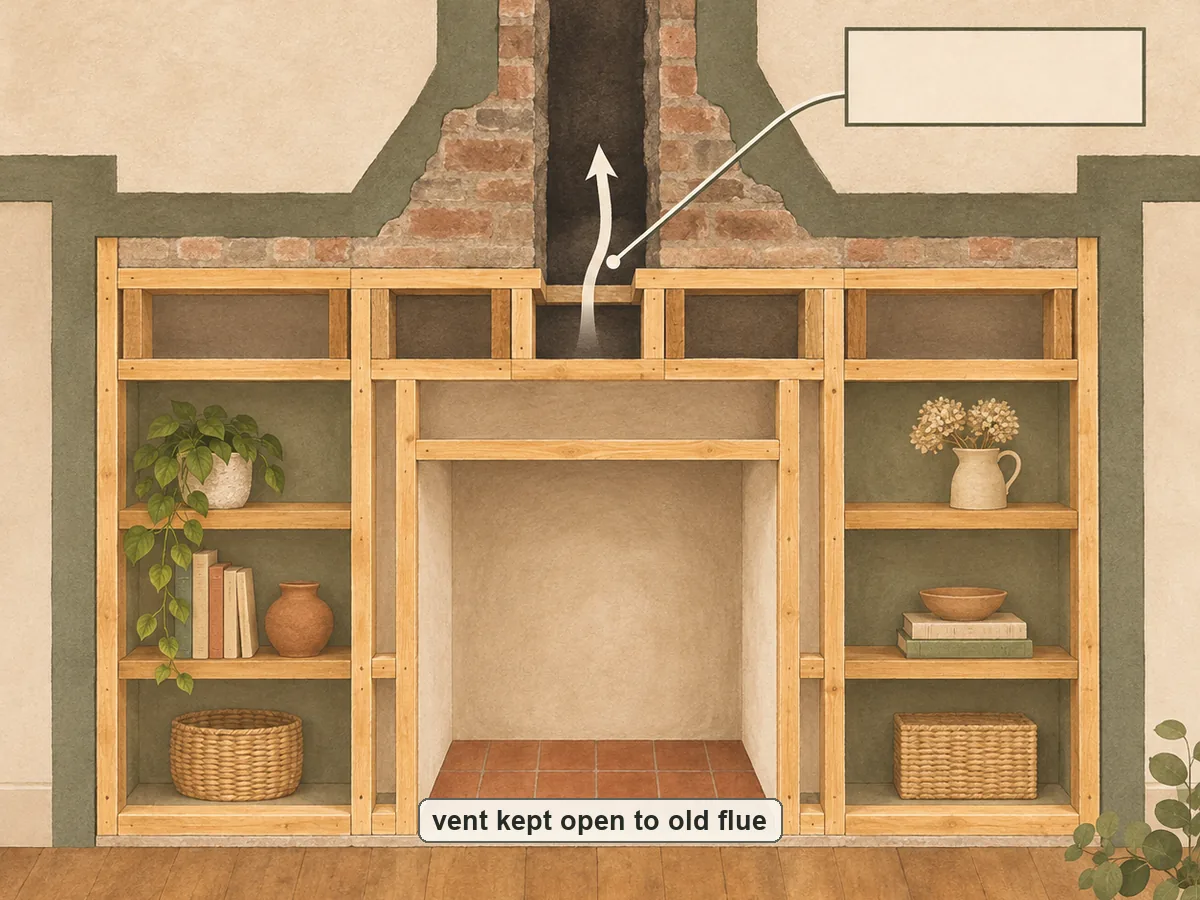
Keep the old flue ventilated
A sealed-up flue can trap moisture. The Society for the Protection of Ancient Buildings' technical advice note on fireplaces, flues and chimneys lists condensation in redundant flues due to inadequate ventilation as a problem, and says disused flues must be ventilated top and bottom. In practice:
- if you block the fireplace opening, fit a vent into the flue at low level;
- don't seal a vent behind the new plasterboard: bring it through the media wall's face, or leave a ventilated route;
- check the chimney pot is capped in a way that still lets air through. A chimney sweep or roofer can advise.
Don't block airbricks
GOV.UK's damp and mould guidance says existing airbricks should be kept clear and free of obstruction. Before you build, look for airbricks, wall vents and grilles on the chimney wall, and keep them working through the new frame.
A live chimney
If the chimney still serves a gas fire, an open fire or a stove elsewhere (for example on another floor, or a shared stack), don't touch it without advice. Flues for solid-fuel and gas appliances are covered by Approved Document J. The HSE says anyone employed to work on gas appliances in a home must be Gas Safe registered, so have a registered engineer disconnect and cap any gas fire.
Removing the chimney breast
Some people take the breast out to get a flat wall. That's a structural job. The Planning Portal's FAQ says building regulations approval always applies when removing chimney breasts, because they are part of the building's structure. The same FAQ says planning permission isn't required to remove an internal chimney breast, but rules may differ for the stack or in a conservation area. If the breast is on a shared (party) wall, GOV.UK says you must tell your neighbours about building work on or near a party wall in England and Wales. Use a structural engineer and building control.
Planning and listed buildings
The Planning Portal says you should not normally need planning permission for internal alterations, but in a listed building you will need listed building consent for any significant works, inside or out. A media wall that hides or alters a historic fireplace in a listed building is likely to need consent. Check with your council if in doubt. Scotland, Wales and Northern Ireland have their own systems.
Fixing to a chimney breast
Chimney breasts are often old brick with soft mortar and an uneven face. Fixing a stud frame to one:
- use fixings suited to the masonry, set into sound brick rather than mortar joints where possible;
- pack the frame out to get a true, flat face. A laser level helps.
- don't drill into the flue itself, and check for cables running in the breast or alcoves first.
For the full build sequence, read how to build a media wall.
Plan it with numbers: the free media wall planner works out the TV height, recess, frame size, depth and a materials list from your room and your fire's published sizes.
Common questions
Can I use the old fireplace opening for an electric fire?
Sometimes, if the opening suits the fire and its manual allows it. Many inset media wall fires are designed for a purpose-built stud enclosure, and the opening must match the manual's recess size. A brick opening is rarely square and may need lining. Keep the flue above ventilated, and if a gas fire used to be there, have a Gas Safe registered engineer disconnect and cap the supply first.
Does a chimney breast make the media wall cheaper?
It can, because the breast already gives you depth in the middle and the alcoves frame the sides, so you need less timber. Against that, old brickwork is often uneven and takes more packing to get a flat face.
Can I mount the TV straight onto the chimney breast?
Yes, if you fix the bracket into sound masonry with fixings suited to it, and the breast doesn't hold a live flue where you're drilling. Check for cables first, and remember the heat question if there's a working fire below.
What about a chimney shared with a neighbour?
A chimney breast on a party wall may contain a flue serving next door. Don't drill into it, block it or remove it without checking. GOV.UK's party wall guidance says you must tell your neighbours about building work on or near a party wall in England and Wales.
Sources
Opened and checked on 15 November 2026.
- spab.org.uk/sites/default/files/SPAB%20Technical%20Advice%20Note_Fireplaces%2C%20Flues%20and%20Chimneys.pdf
- gov.uk/government/publications/damp-and-mould-understanding-and-addressing-the-health-risks-for-rented-housing-providers/understanding-and-addressing-the-health-risks-of-damp-and-mould-in-the-home--2
- interactive.planningportal.co.uk/faqs/do-i-need-permission-to-remove-chimney-breasts
- planningportal.co.uk/permission/common-projects/internal-walls/internal-walls-planning-permission/
- gov.uk/government/publications/combustion-appliances-and-fuel-storage-systems-approved-document-j
- drufire.com/en-gb/assortiment/dru/virtuo/virtuo-150-3-evolve
- econovexfires.co.uk/wp-content/uploads/2026/10/econovex-owners-manual-3-sided-deep-and-slimline.pdf
- hse.gov.uk/gas/domestic/faqs.htm
- gov.uk/party-walls-building-works
- hse.gov.uk/gas/domestic/faqs.htm